Candace Kinser
National Candidate for Auckland Central
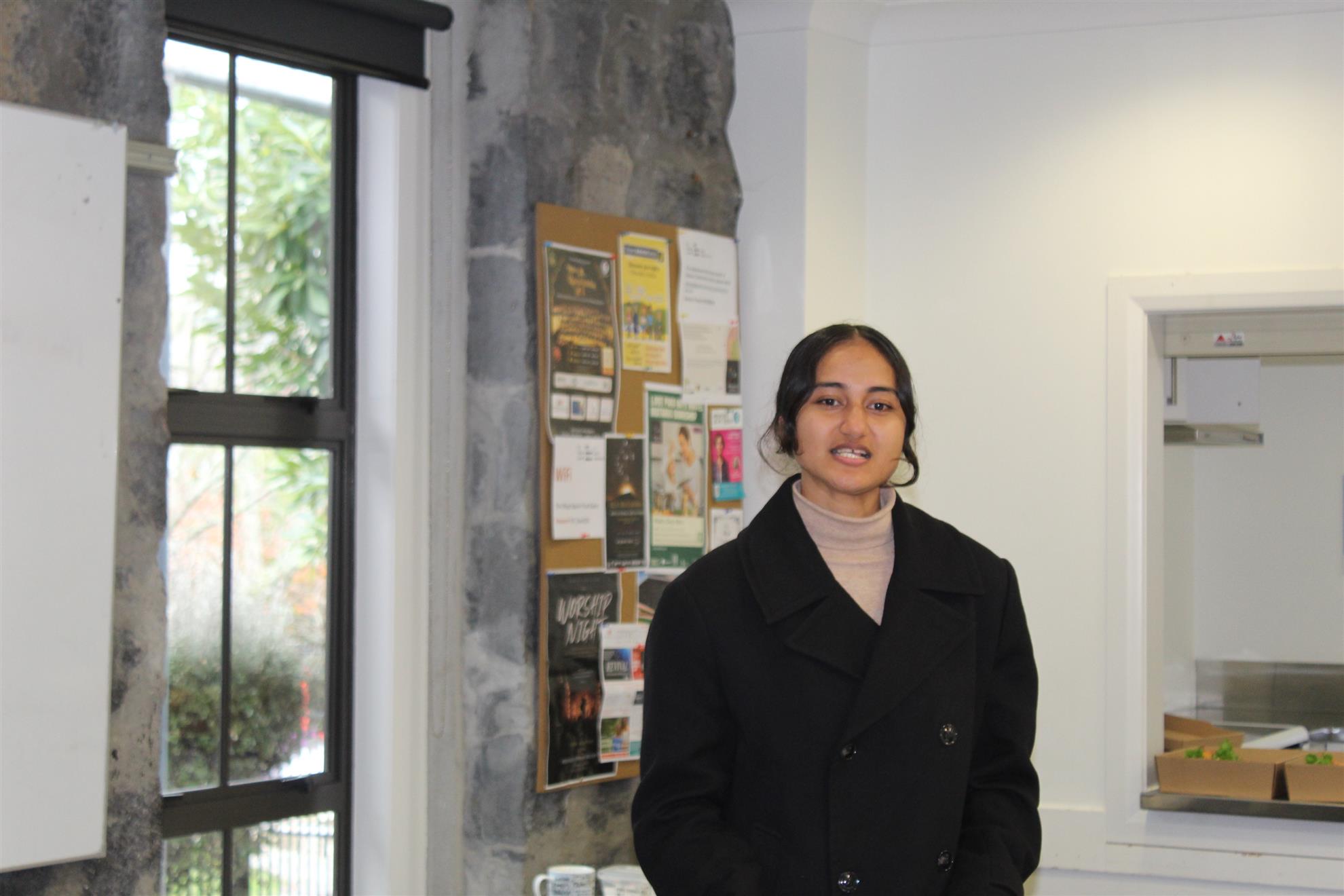
Candace Kinser thanked our Rotary members for the opportunity to speak and acknowledged the important role Rotary continues to play in strengthening local communities. She began by reflecting that a successful city depends on more than roads, rail, pipes and buildings. It also relies on civic trust, neighbourliness, voluntary service and the willingness of people to step forward when help is needed. In that sense, she said, Rotary’s commitment to “service above self” remains exactly the kind of practical community leadership Auckland needs.
She then shared something of her own story. Born in Austin, Texas, she arrived in New Zealand in 1998 as a young newlywed and has now called this country home for nearly three decades. Her early years here involved long working days across several jobs, including reception work, hospitality and technology support. She described New Zealand as a country that “took a chance” on her, and said her decision to pursue public service is partly motivated by a desire to give back to the community that welcomed her.
Her professional life has spanned science, technology, health, entrepreneurship, governance and philanthropy. She spoke about helping build Bio Matters, a genomic software company that began in a small space at the University of Auckland and eventually became part of a global business. She also reflected on creating and growing Techweek, serving on company and community boards, supporting both listed and family-owned enterprises, and helping establish charitable initiatives such as the Well Foundation. A recurring lesson from that work, she said, was that leadership is rarely about one person. It is about listening well, backing capable people, creating the conditions for them to succeed and sharing credit generously.
Her experience with cancer in her twenties, and later involvement with the Cancer Society, also shaped her outlook. She spoke strongly about prevention, access to medicines and the very human reality behind health policy. For patients and families, she said, an effective treatment can mean another birthday, another Christmas or simply more ordinary time together. These experiences have helped form her view that public policy should remain grounded in real lives, not only in systems and statistics.
A major theme of the address was ambition for New Zealand’s economy. She argued that New Zealand is very good at starting things, with creative people, entrepreneurs and a strong start-up culture. The next challenge is to become better at growing businesses to scale. Start-ups create possibility, but scale-ups create jobs, supply chains, export earnings, investment and future founders. She emphasised the need to lift productivity, deepen capital markets, commercialise more research, grow exports and build an economy strong enough to fund the health, education and infrastructure services New Zealanders expect.
Education was described as central to that future prosperity. She welcomed a renewed focus on structured literacy, mathematics, a knowledge-rich curriculum and clearer reporting to parents. She also noted improved school attendance while acknowledging that more progress is needed. In her view, children who can read confidently and understand mathematics gain access to science, technology, engineering, problem-solving and wider life opportunities.
Health was another important focus. She highlighted increased investment in medicines, including cancer treatments, and acknowledged the pressures facing hospitals and frontline staff. While noting public concern about nursing shortages, she said the broader workforce picture includes growth in nursing numbers and improving vacancy rates. She stressed that continued respect, safe working conditions and faster recruitment remain essential.
She also spoke about fiscal discipline, arguing that New Zealand needs to return the operating balance to surplus, reduce debt over time and manage public spending carefully. For a small country exposed to earthquakes, severe weather, global conflict and economic shocks, she described a strong Crown balance sheet as a form of national insurance.
Turning to Auckland Central, she said residents often express deep affection for the city alongside real frustration about safety, transport, homelessness, parking, red tape and a sense that Auckland has lost some of its energy. Her priorities include stronger community safety, visible policing, better support for local businesses, well-planned housing growth, infrastructure that keeps pace and protection of special heritage areas. She argued that heritage and progress need not be enemies; with good planning, both can be protected.
She closed with an optimistic vision for Auckland Central as the safest, most innovative and most welcoming urban electorate in Australasia. She wants a city where people can move around confidently, businesses can open without unnecessary bureaucracy, public spaces are lively with festivals and culture, and residents feel safe, proud and connected. Her final challenge was simple: make Auckland safer, easier to navigate, more welcoming to enterprise—and fun again.
Candace was thanked by Darius Mistry.


Le Quesnoy, celebrating the WW1 achievement of a town liberated without any destructive bombardment – thanks to the bravery and ingenuity of NZ soldiers, is the only NZ museum outside our country – featuring a range of most notable human stories. Scott particularly noted Winiata Tapsell who returned to live at Maketu and fathered 21 children! Portugal also brought memories of home – as a small country on the edge of Europe, looking out to sea, while the Spanish territory of Madeira is a volcanic island, the size of Singapore.
Come join us for a club meeting
Auckland, 1051
New Zealand