
Our main speaker on Tuesday night was Ruben Miller, a forensic scientist, author and speaker.
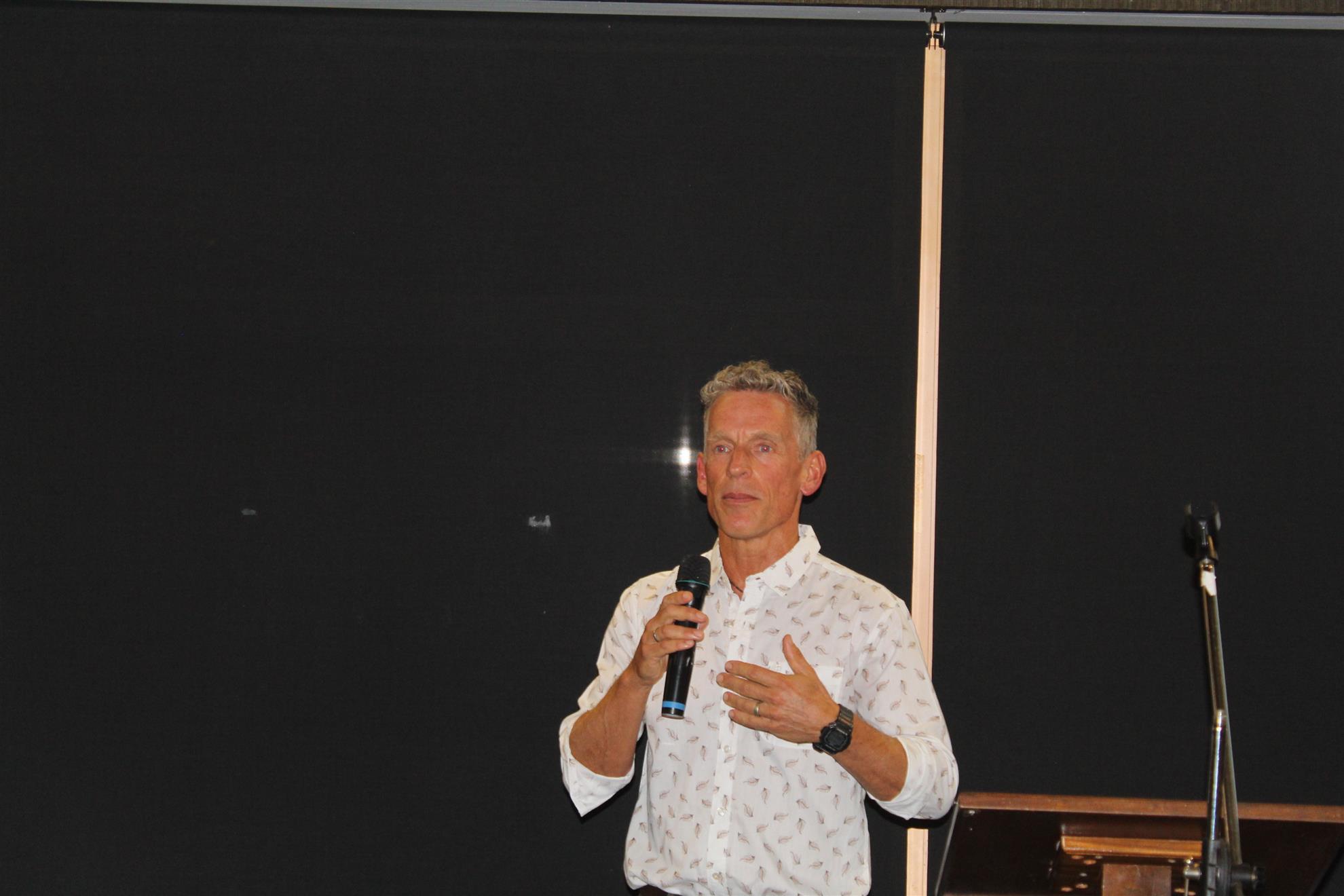
Ruben worked for 23 years on major crime scenes across the country from high profile homicides to forgotten domestic violence cases trying to make sense of what was left behind. For most of those 23 years Reuben worked with PHF Science ( then ESR) NZ’s National Forensic Laboratory in close collaboration with police.
He spent two decades investigating violence in its rawest forms and living with the human cost of doing that work day after day. In 2022 Reuben stepped back from the front lines moving into training and intelligence and became an indirect independent forensic scientist working with both prosecutors and defence lawyers and writer.
Ruben told us of the misconceptions about CSI (Crime Scene Investigation) and its portrayal in popular media, emphasizing the unrealistic nature of such depictions. In particular, it is not possible to wind up a forensic examination and get results all convieniently packaged within an hour. In contrast, real forensic work is complex, methodical, and highly dependent on context rather than instant conclusions.
Ruben then took us through the historical foundations of forensic science, starting with Edmund Locard’s Exchange Principle — that every contact leaves a trace. While the principle remains relevant, Ruben highlighted its modern limitations, particularly with DNA evidence, which is extremely sensitive and vulnerable to contamination. Practical scene management and disciplined use of protective measures were noted as essential to preserving evidence integrity.
In contrasting media portrayals with reality, Ruben explained that most crime scenes in New Zealand are not elaborate or theatrical, but often simple, brutal, and emotionally confronting. Practical challenges include limited resources, reliance on natural light, and lengthy DNA processing times, which can take four to six weeks. The “CSI effect” was identified as a significant influence on juries and judges, sometimes placing pressure on forensic teams to use advanced technology where simpler tools may be more appropriate.
Personal reflections formed a key part of the address. Ruben spoke candidly about the emotional impact of forensic work, the pressure to compartmentalise emotions, and the unrealistic stoicism often expected within the profession. They shared insights gained through crime‑scene sketching and difficult cases, highlighting how social and environmental factors contribute to criminal behaviour and why simplistic notions of “good” and “bad” people are unhelpful.
The importance of teamwork and humility was strongly emphasised, challenging the myth of the lone forensic expert. Ruben reflected on both solved and unsolved cases, noting that closure is not always possible and that ambiguity is a frequent feature of real investigations
The role of media in shaping public perceptions of crime and forensic science was also discussed, along with the responsibilities involved in communicating real cases sensitively. Humor and camaraderie were acknowledged as vital coping mechanisms within forensic teams.
Ruben's presentation concluded with reflections on resilience, leadership, and the importance of emotional support and self‑care within the profession. Ruben reinforced the point that forensic science is not defined solely by technology, but by ethical judgment, collaboration, compassion, and a realistic public understanding of its challenges.