
Murray Thom
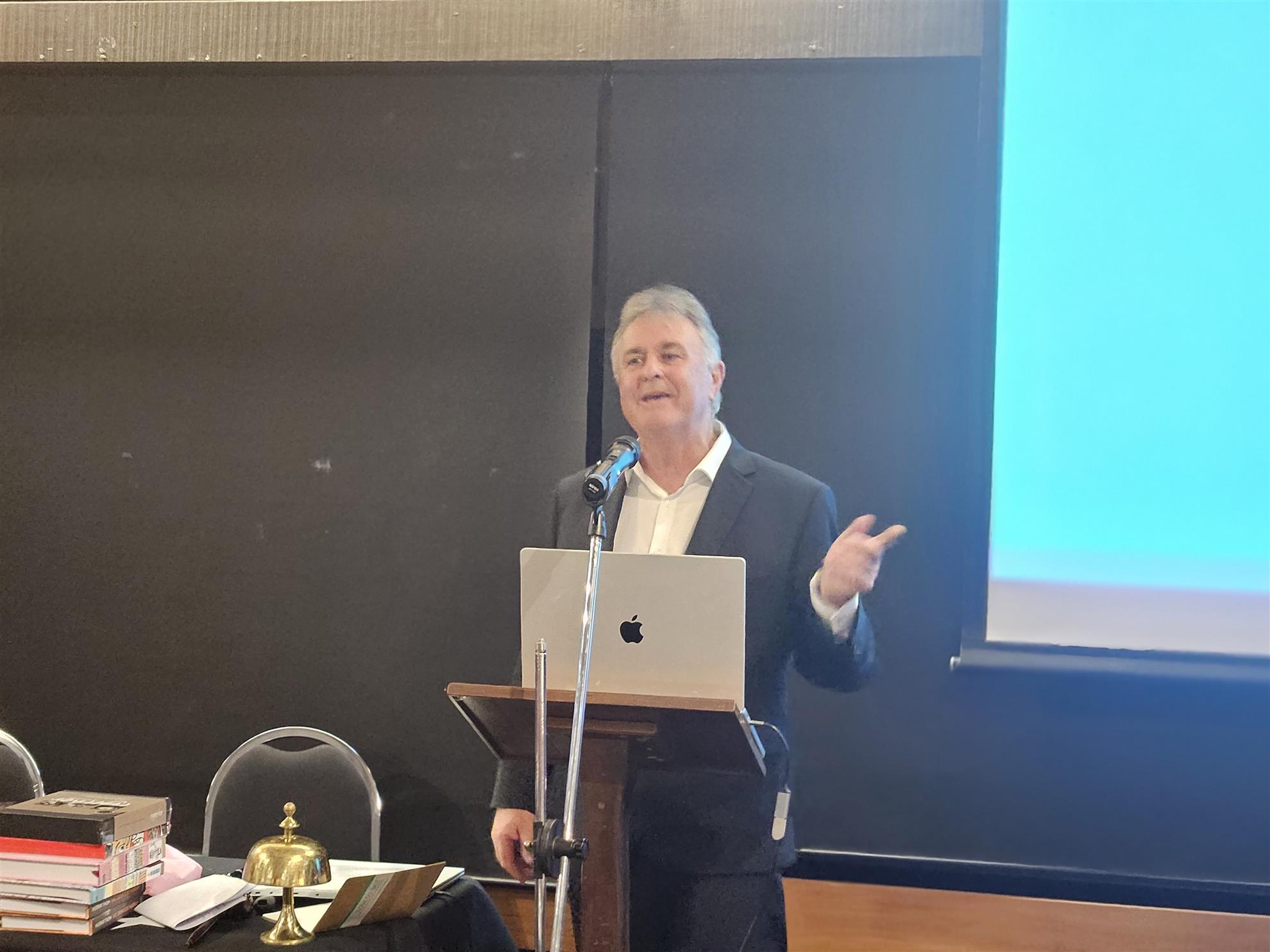
Our guest speaker, Murray Thom, delivered an engaging, anecdote-rich speech that combined personal history, career highlights, and lessons about spotting and seizing opportunities. He spoke warmly and candidly, connecting his life experiences to themes of mentorship, persistence, instinct, celebration, and the importance of creating work of quality. His tone throughout was conversational, grateful, and occasionally humorous, making the talk both entertaining and instructive for the Rotary audience.
Opening and Acknowledgements
Murray began by expressing his affection for RYLA events and appreciation for the Rotary team, singling out Brian for his dedication. He thanked Rotarians for their community work and acknowledged the hospitality he experienced. He kept his opening brief but warm, setting an informal, friendly mood.
School Years and Early Influences
He recounted being a challenging student and reflected on the profound influence of two women: Mrs. Megson, a teacher who believed in him and whose encouragement he sought out and thanked decades later, and his mother Margaret, whose firm guidance shaped his approach to life. Murray emphasized how a single person’s belief can change a life trajectory, crediting these early influences for helping him persevere despite leaving school with no real qualifications.
First Jobs and Breakthrough at CBS Records
Murray narrated early jobs such as delivering pamphlets and an early stint as a sales representative at CBS Records. He described being hired by John McCready despite a ‘‘checkered’’ work history and how McCready’s faith in him led to rapid promotion. Murray rose quickly through the company, ultimately becoming managing director of the New Zealand arm of CBS at age 23 with a sizable staff, again attributing this success to someone who recognized potential and invested in him.
Transition to Self-Employment and Key Projects
Wanting to be self-employed, Murray left CBS when his wife Anne was pregnant and ventured into independent business in 1987. He recounted early projects and collaborations, including signing artists like Dave Dobbins and working on successful New Zealand albums. He also described diversifying into ventures such as personalized number plates—a profitable but ultimately secondary business—and emphasized his preference for creative, meaningful work over simply profitable enterprises.
Identifying Opportunity: Piano by Candlelight and Carl Doy
One memorable story involved Murray and Anne hearing a pianist at the Sheraton and deciding to sign him. That pianist, Carl Doy, became a long-term collaborator on the Piano by Candlelight series and the Together 10 CD collection. Murray used this tale to illustrate how opportunities often whisper rather than shout, and how following instinct—being ready to act on small, quiet observations—can yield large rewards. He highlighted the importance of doing world-class work for the sake of quality and the soul, not just profit.
Expansion into New Markets and Ongoing Partnership
Murray noted the long-standing partnership with Carl Doy—spanning decades—and expressed excitement about breaking into new markets such as China. This illustrated how sustained commitment to creative projects and thoughtful marketing can gradually open unexpected international opportunities.
Small Moments, Big Ideas
Several anecdotes emphasized how casual remarks or everyday moments produced major projects. For instance, a dinner comment about a guitar album led to Wicked Game and the album’s huge streaming success. Similarly, a throwaway remark after a concert gave birth to the Great New Zealand Songbook. Murray stressed that many significant ventures began as modest, offhand observations—ideas that were nurtured and given a chance.
The Great New Zealand Songbook and Cookbook Series
Murray outlined several themed publishing and music projects: the Great New Zealand Songbook, which featured handwritten lyrics by prominent artists; the Great New Zealand Cookbook and subsequent themed cookbooks and baking books; and international versions including Australian and UK editions. These projects combined cultural pride, collaboration with well-known figures, and creative packaging to reach broad audiences. He used these examples to show how a compelling concept, executed well, can achieve sustained success.
Collaboration with Visual Artists and Cross-Discipline Pairings
For projects like The Offering and other compilations, Murray described pairing musicians with visual artists to create unique works that raised significant funds for charity (for example, a substantial sum for the Salvation Army). He emphasized that assembling clever people around a clear vision amplifies impact and that charitable outcomes often follow from well-constructed creative projects.
Miracle Project with Anne Geddes and Celine Dion
Murray recounted the Miracle Project, a collaboration involving baby photography by Anne Geddes paired with music contributions. He explained how early efforts included attempts to involve major international artists and how persistence and revisiting opportunities eventually brought Celine Dion on board. The project gained massive success and global exposure (including appearances on The Oprah Winfrey Show), demonstrating how local initiatives can reach worldwide audiences when they pair strong visuals, heartfelt concept, and prominent collaborators.
Celebration, Birth Notices, and Giving Away Product
Murray reflected on the importance of celebrating creative ‘‘births’’—projects, albums, and products—by publicizing them widely. He described how he often gave away product copies to create connections and generate opportunities. One of those giveaways led to collaboration with people connected to Anne Geddes and eventually to the Miracle Project’s international success. He framed marketing and gifting as part of celebrating the labor of creativity and creating pathways to unexpected partnerships.
Offering Project and Fundraising
The Offering Project was conceived as a contemporary reinterpretation of traditional hymns, with modern artists recording them as an ‘‘offering.’’ The compilation brought together top performers and visual artists, and the project raised substantial funds for the Salvation Army. Murray used this as an example of how a clear, heartfelt brief can motivate high-caliber contributors and generate meaningful community benefit.
Lessons from Performers: Rob Guest and Professional Excellence
Murray closed with reflections on performers’ dedication, telling the story of Rob Guest, who performed leading roles thousands of times and always gave full effort. The example illustrated the rewards of professional discipline, persistence, and the importance of showing up and delivering consistently despite an often fickle or initially unimpressed audience. Murray used this to encourage resilience and dedication among creators and entrepreneurs.
Key Themes and Takeaways for Rotary Members
- Mentorship Matters: Small acts of belief from teachers, bosses, and family can change lives. Recognize and mentor emerging leaders.
- Act on Quiet Opportunities: Opportunities often whisper; cultivate instinct and be ready to act on subtle signals.
- Quality for the Soul: Aim for excellence even when immediate profit is not obvious—craftsmanship matters for personal and cultural legacy.
- Celebrate and Publicize: Treat new projects like births—celebrate them, give them exposure, and use generosity strategically to build relationships and momentum.
- Collaborate Across Disciplines: Pair musicians, visual artists, chefs, and others to create distinctive, high-impact products and events.
- Persistence and Professionalism: Consistent high-quality performance builds reputations and opens doors, even if recognition takes time.
- Give Vision Shape: A compelling vision attracts talented people; leaders should articulate clear briefs and invite contribution.
- Charitable Impact: Well-crafted creative projects can raise significant funds and serve community causes.
Practical Suggestions for Rotary
Murray’s examples yield practical ideas Rotary members could adapt locally:
- Mentor young members and leaders, taking time to affirm potential and provide opportunities.
- Encourage members to act on low-key ideas—host a ‘‘whispered idea’’ forum where small concepts are pitched and fast-tracked.
- Create a community cookbook or songbook featuring local talent and handwritten contributions to raise funds for a local cause.
- Pair local artisans with performers to produce collaborative events that celebrate community culture and raise money for service projects.
- Celebrate local project launches publicly with ‘‘birth notices’’ in newsletters and social media to build pride and invite participation.
Conclusion
Murray’s speech was a mix of memoir, practical insight, and encouragement. He reminded the audience that impactful ideas often begin in small moments, that believing in people can transform lives, and that dedication to craft and collaborative vision can create projects with cultural and charitable value. His warmth, humor, and insistence on celebrating the effort behind creative works left a positive and motivating message for Rotarians seeking to foster leadership, creativity, and community impact.