Please remember that some devices will limit the length of the email you see.
Tap the "View Entire Message" to view the whole newsletter.
President's Notes
From Co-President John
Another excellent evening meeting this last Tuesday that contained a bit of everything for The Rotary Club of Newmarket.
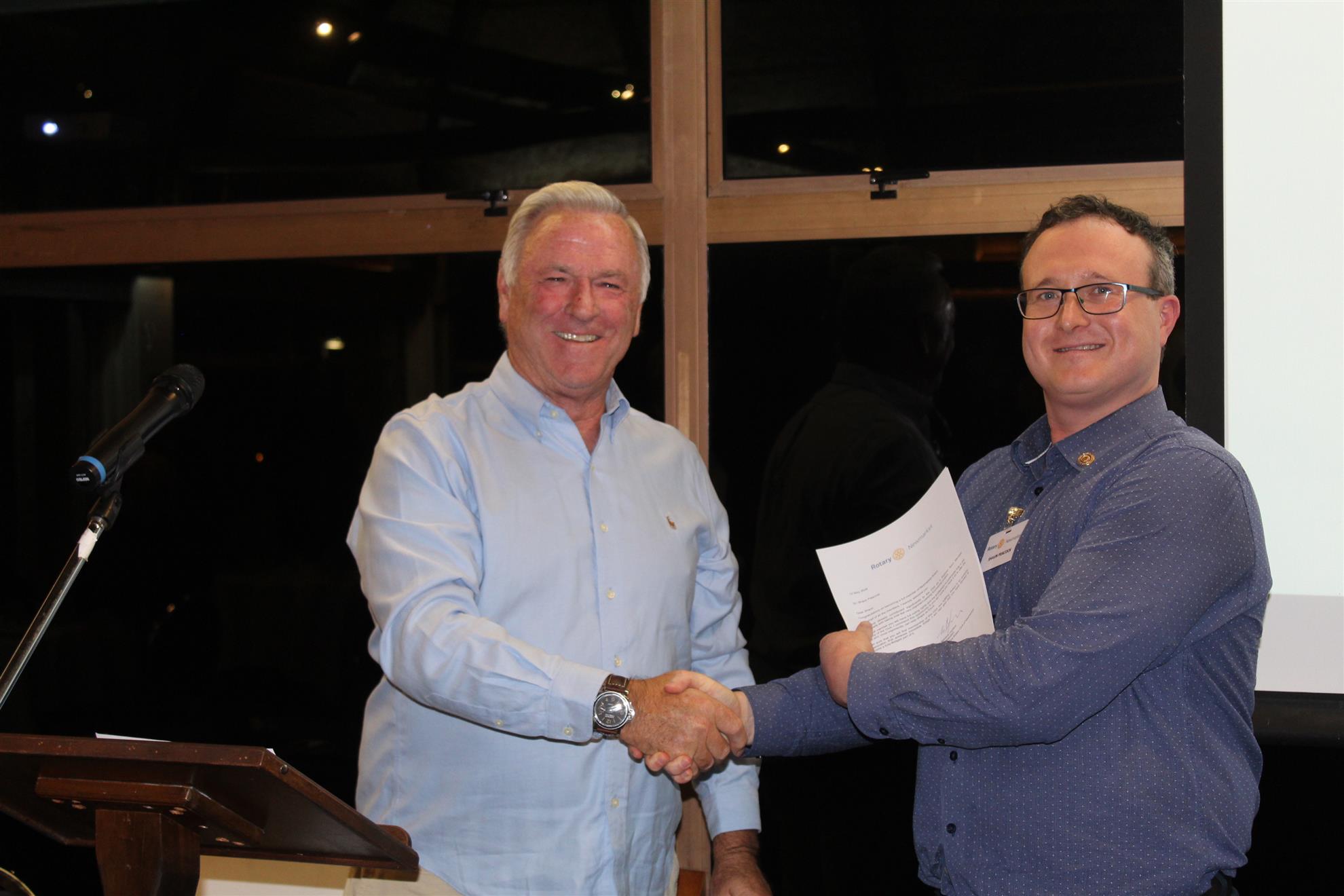
Two new members were inducted into the club;
Shaun Peacock who many of you will already be familiar with has been heavily involved with Rotary well before his engagement with our club.
Past President of Rotaract Club of Auckland City, a Paul Harris fellow (with two sapphires no less), District Rotaract Chair for 9920 and chair of the Rotaract Oceania Multi District.
His service is already long and well recognised. Since becoming involved with RCON he has taken on the responsibility for running the Go Media parking fundraising.
A very active and enthusiastic new member and we welcome Shaun to our club.
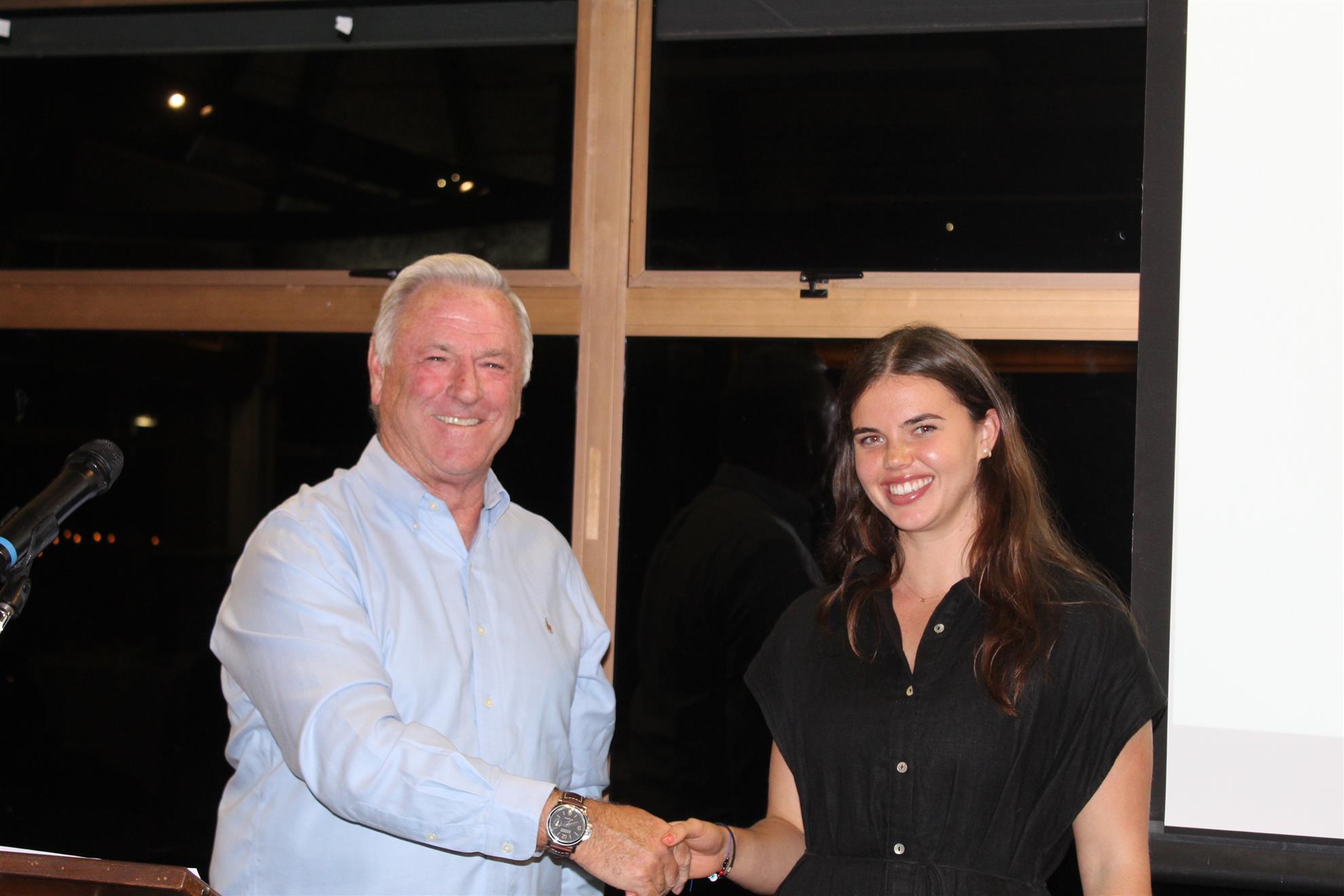
Lucy Holloway has joined as an RSTM. Her introduction to rotary came from attending RYLA and while volunteering at the Go Media Parking expressed interest in becoming involved further with Rotary.
RSTM membership is the perfect avenue for her to explore the value of Newmarket Rotary membership. Lucy works as a payroll administrator at 2degrees, she is a competitive runner and participates in a wide range of outdoor activity.
Lucy will be joining the enthusiastic team on our Youth Committee.
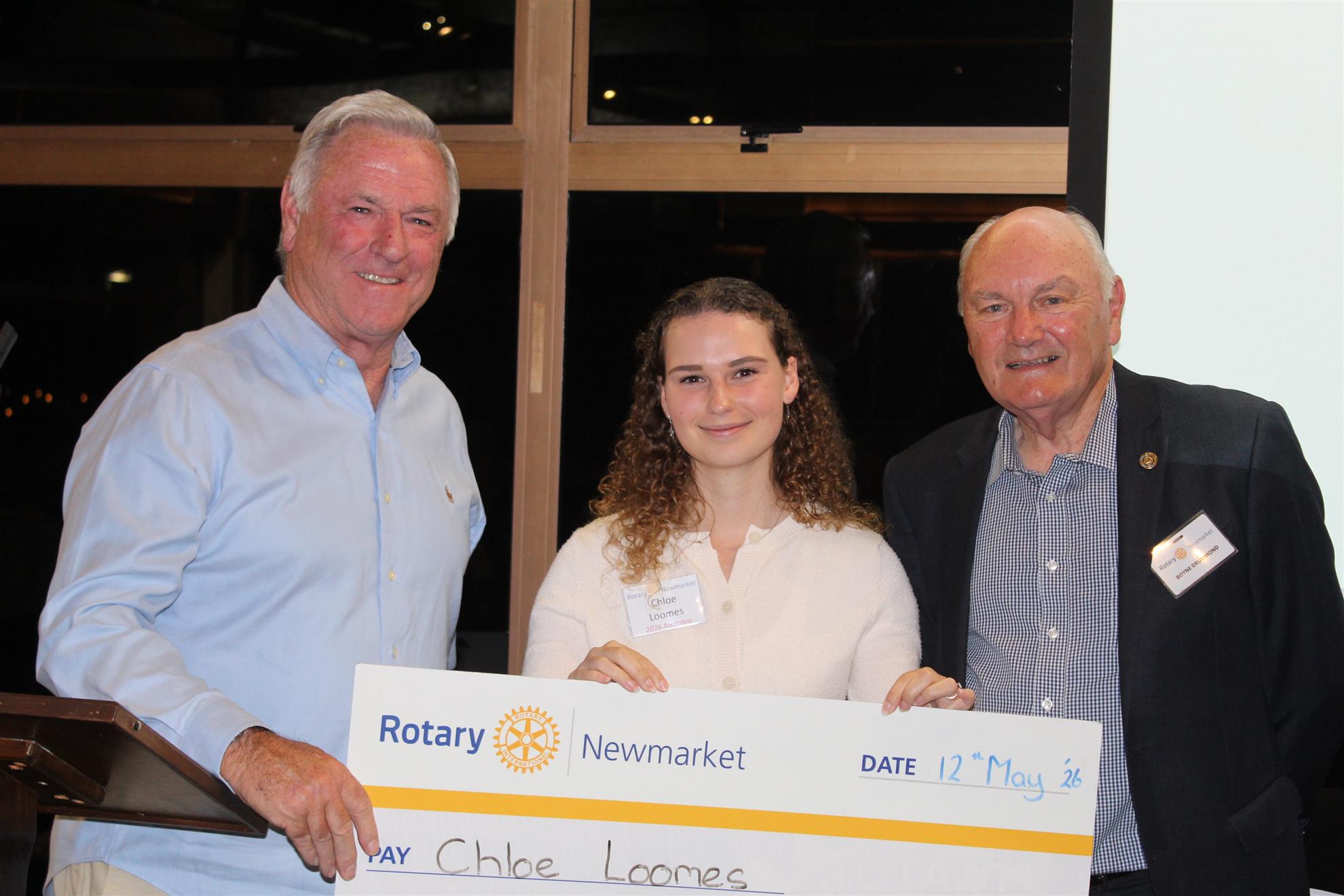
At this point I passed on to Boyne and John Graham who introduced our past and current Environmental awardees from 2024, 2025 and this years awardee Chloe Loomes who was the recipient of our $18000 research grant to assist with her studies of the health of Little Blue Penguins in the Hauraki Gulf.
The club is very grateful to The Chenery and June Grey Trusts whose support has helped to make this upgraded grant available.
Talking about RYLA I would just like to add that I have been really honoured to be able to assist Alastair Macfarlane over the last few days interviewing prospective RYLA candidates for 2026 at Watercare.
Without going into detail I can assure members that Newmarket Rotary will be very well represented at this years event with the excellent calibre of applicants (6) we had the privilege to meet.
Let me also take this opportunity to recognise the significant number of Newmarket members that are dedicated to this most rewarding program we are most certainly in your debt and be assured you will change these candidate's lives for the better.
Dilworth
Richard Solomon has reported that Rotary Remuera has arranged for Dan Reddiex, Headmaster of Dilworth to speak at their meeting on Monday 8th June, 5.30, and they are graciously inviting our Club to join them in view of our mutual interests in the school.
Richard has had a long relationship with Dilworth and believes this is an important opportunity for our members to accept. Reasons are......
1. Dan Reddiex is sure to deliver a very interesting and positive address, given his role in the rejuvenation of the school from off-the-floor to respected top standards.
2. Our longstanding relationship with the school up until it was assigned to the Remuera Club and ongoing since then on at least 3 projects.
3. Our relationship with the Remuera Club generally and specifically with regard to Dilworth.
4. You will note in his invitation the following significant words.- "for once we can host our parent club, even if it has taken some 46 years to happen!" .
The dinner meeting is on Monday 8th June at Carlton Cornwall Bowling Club, 5.30 for 6.00pm.
Linda Mabey
As many members will remember, Linda was wife of past member Bill and together they ran the very successful Stars Travel in Newmarket.
Linda was also the daughter of another past Member Nobby Clarke. Linda died recently following a period of ill-health.
Linda service was help at St Marks Parish on Thursday and was attended by a small group from RCON which was deeply appreciated by Bill.
John
Co-President
Club News and Notices
Chloe Looms
Chloe is the 2026 Recipient of the Hauraki Gulf Environment Award.
After being presented with the award Chloe spoke to us, telling of her research on the diet, foraging ecology, and body condition of blue penguins in the Hauraki Gulf.
The intention of her research is to understand the impact of environmental conditions on penguin health and ecosystems.
Chloe told us of the importance of blue penguins as environmental indicators and their role in supporting ecosystems. She described the diverse marine environment of the Hauraki Gulf and its impact on penguin health.
Her research is using three sites: Goat Island (healthy environment), Great Barrier Island (oceanic conditions), and Otata Island in the Noises group (degraded environment). Research methods include measuring body condition, feather pigmentation, heavy metal analysis, and foraging behavior using GPS loggers.
The aim of Chloe's research is to provide baseline data for future studies and compare penguin health across different environments.
Chloe told is a little about her fieldwork, including GPS loggers, flipper measurements, and blood and feather samples. She showed us the little blue penguin's foraging range and dive depths, which provides valuable ecological information. Chloe's research will also analyze penguin poop (scats) and stable isotopes to determine their diet.
Chloe expressed gratitude for the award funding, which will support boat trips and additional data collection.
Kathryn Lockton
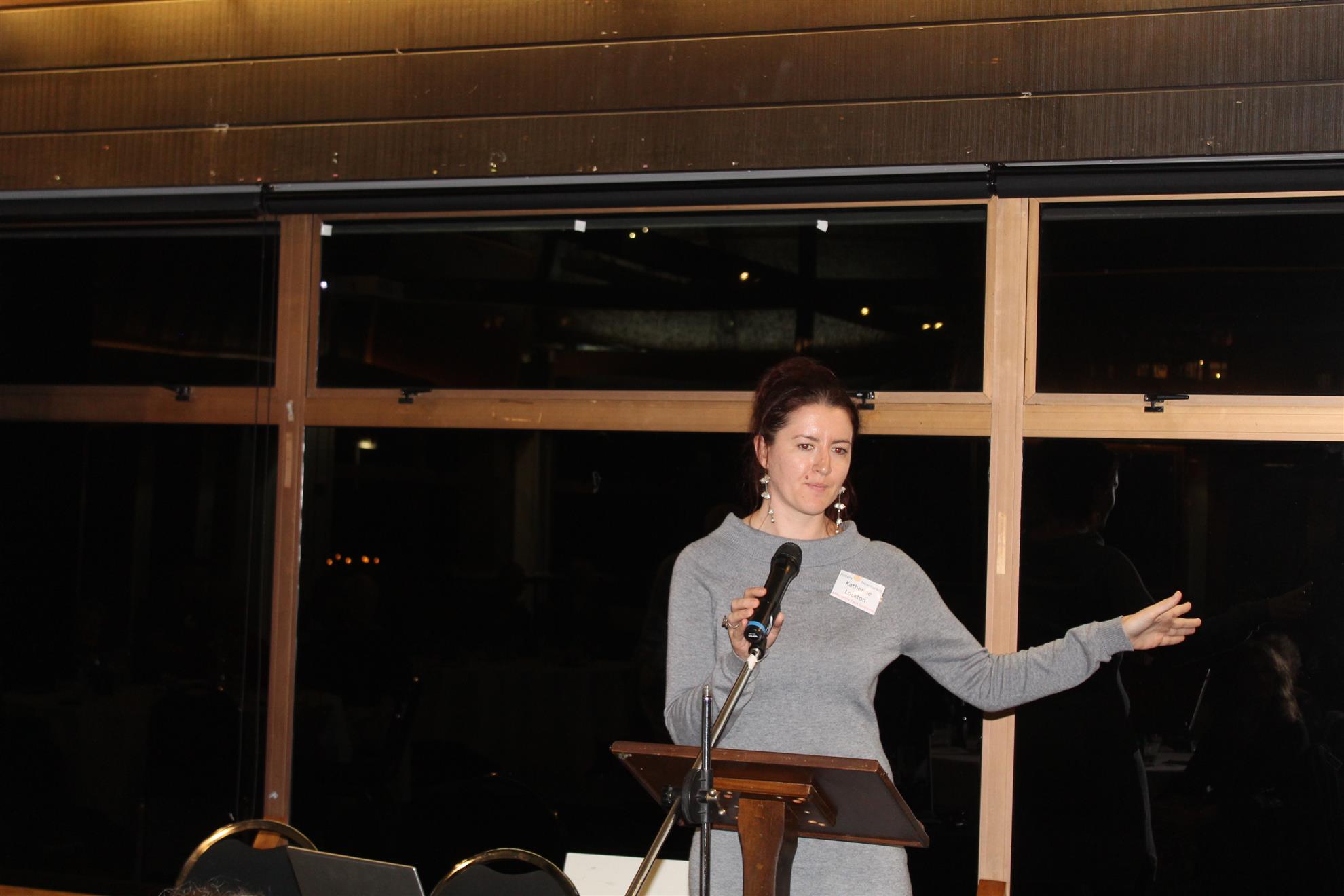
Kathryn was the 2024 reciepent of the clubs Hauraki Gulf environment Award ◦
Her research addresses the topic of Milky White Fish Syndrome, and updated us on her ongoing research.
She explained the project's focus on the syndrome, its impact on fish, and the visual changes observed in affected fish. The aim of the project is to quantify changes in fish weight and condition, comparing healthy and affected fish. Kathryn spoke of the environmental factors contributing to the syndrome, including nutritional deficiencies and warmer summer conditions.
Kathryn then reminded us about the physical changes in affected fish, such as skinny appearance, white and mushy flesh, and bulging eyes. Findings in the project noted that affected fish are skinnier regardless of size, while healthy fish are better for their size. The syndrome is linked to interacting factors of environment, host, and agent, similar to the CDC's disease model.
Kathryn spoke of the need for further experiments to determine if the condition is reversible with better food availability.
She told us of the challenges faced in the research, including weather conditions affecting data collection.
Going forward Kathryn will be undertaking a comparative tank test of healthy fish and diseased fish to attempt to see how environmental conditions in a controlled space affect the health of the sample fish and also to see if diseased fish can be brought back to good health.
We look forward to the outcome of that research.
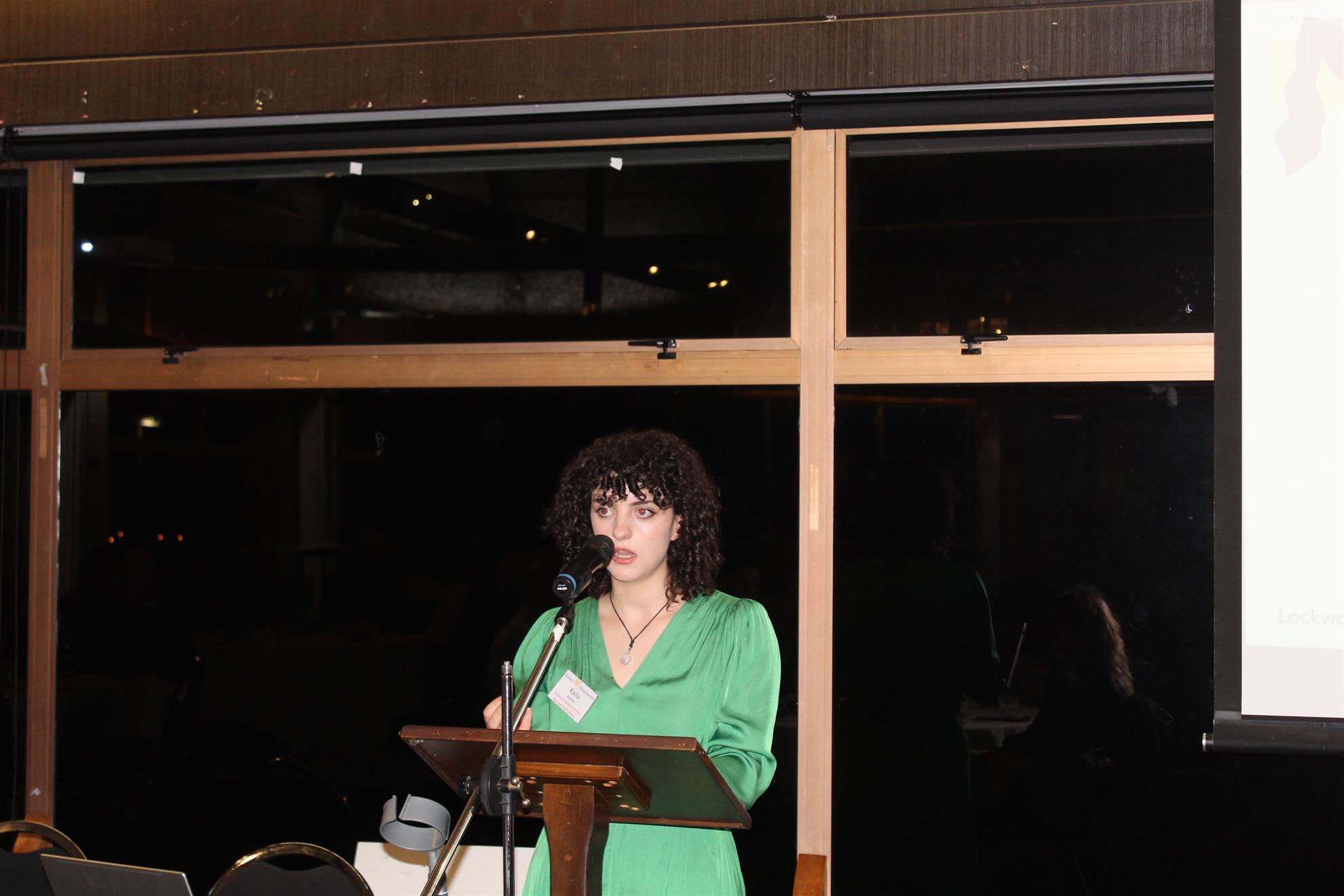
Karla Butcher
Karla was the 2025 recipient of the Hauraki Gulf Environment award.
At our meeting, she updated us on her research into the biosecurity of the Hauraki Gulf. She explained the concept of invasive species and the importance of biosecurity in preventing negative impacts. Her research is focused on the biosecurity risks associated with potted plants and potting mix used in restoration projects.
She told us about the use of environmental DNA (eDNA) to detect invasive species in samples taken from potted plants and potting mix.
Karla presented her findings to us, noting that biosecurity measures for potting mix are effective for animal contaminants but not for fungal contaminants. She highlighted the presence of various contaminants in potted plants and potting mix, including arthropods, mollusks, and decomposer and symbiotic fungi.
Karla has concluded through her research that potted plants may pose a biosecurity risk due to the presence of hardy species that resist high heat treatment. She emphasizes the importance of her research in informing local councils and government about potential biosecurity risks.
Concluding Carla mentioned that her research is the first to use eDNA for terrestrial biosecurity research in New Zealand and globally for assessing modern mass pathways. Finally, She thanked the club for facilitating her research and shared her pride in the work done.
Andrew Jeffs and Conrad Pilditch
Tuesday's meeting marked an end and a beginning.
It marked the end of Andrew's association with the club in relation to the environmental awards and the beginning of Conrads involvement in his capacity as director of the Institute of Marine Sciences.
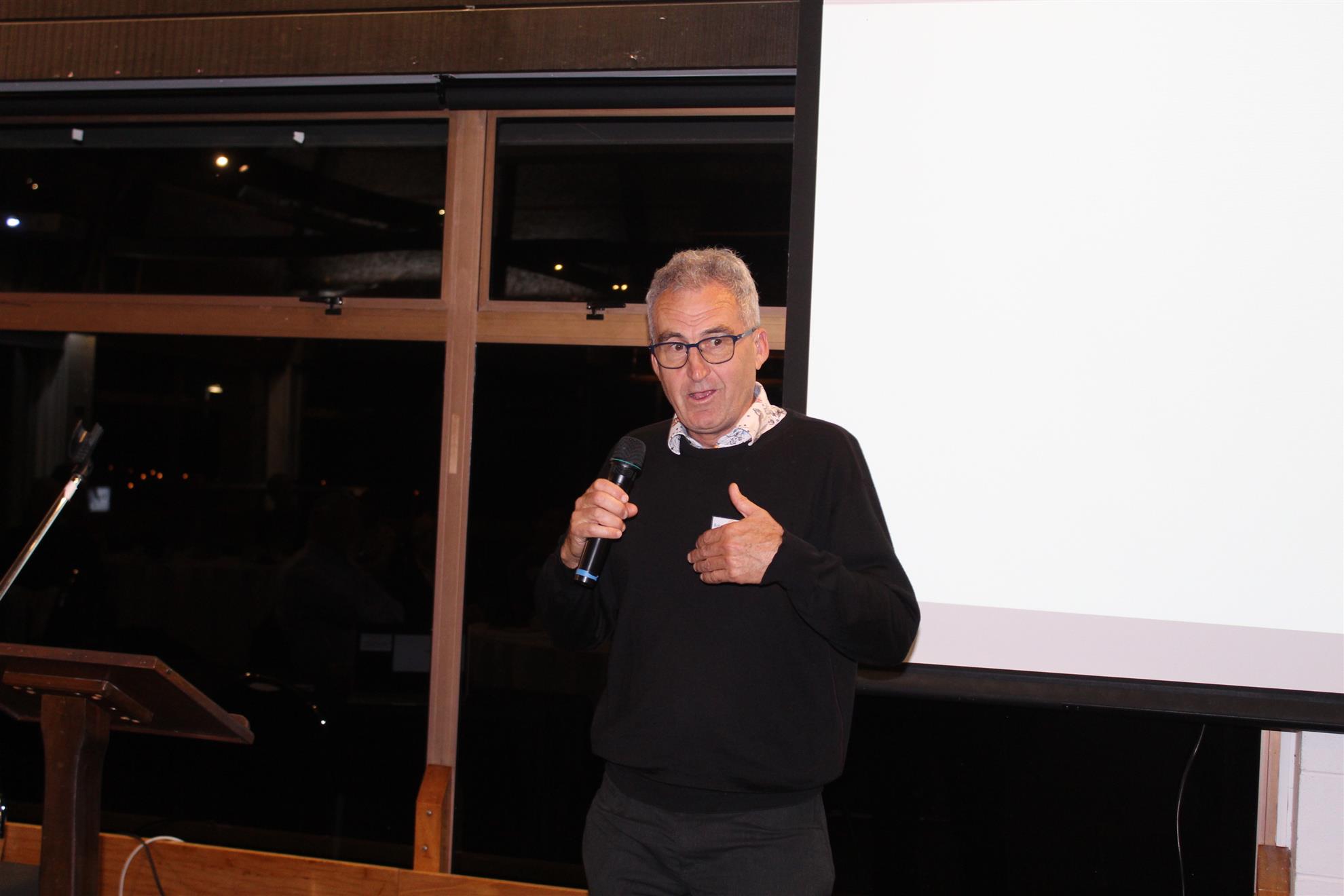
Andrew has been involved since day 1 selecting award recipients, involving a shortlist and interviews. He has been a critical part of the award since its inception and has been invited to speak at each award evening.
Andrew credits Rotary, especially Boyne and John, for the success of the award, describing it as a unique phenomenon. He highlighted the unusual nature of the award topics, such as penguin poo and sick fish, and praised the commitment of our club to the Hauraki Gulf.
He highlighted the positives impact of the award on young researchers, citing examples of previous recipients like Eden Whitehead and Sophie Roberts. He emphasizes the importance of recognizing the award's legacy and the organization's role in supporting valuable research. He noted the ongoing degradation of the Gulf and the critical role of good research and information in making informed decisions. He praised Rotary's contribution to supporting research that addresses these challenges.
Concluding he thanked the organization for its generous support and introduced us to Conrad, who will take over the management of the scholarship.
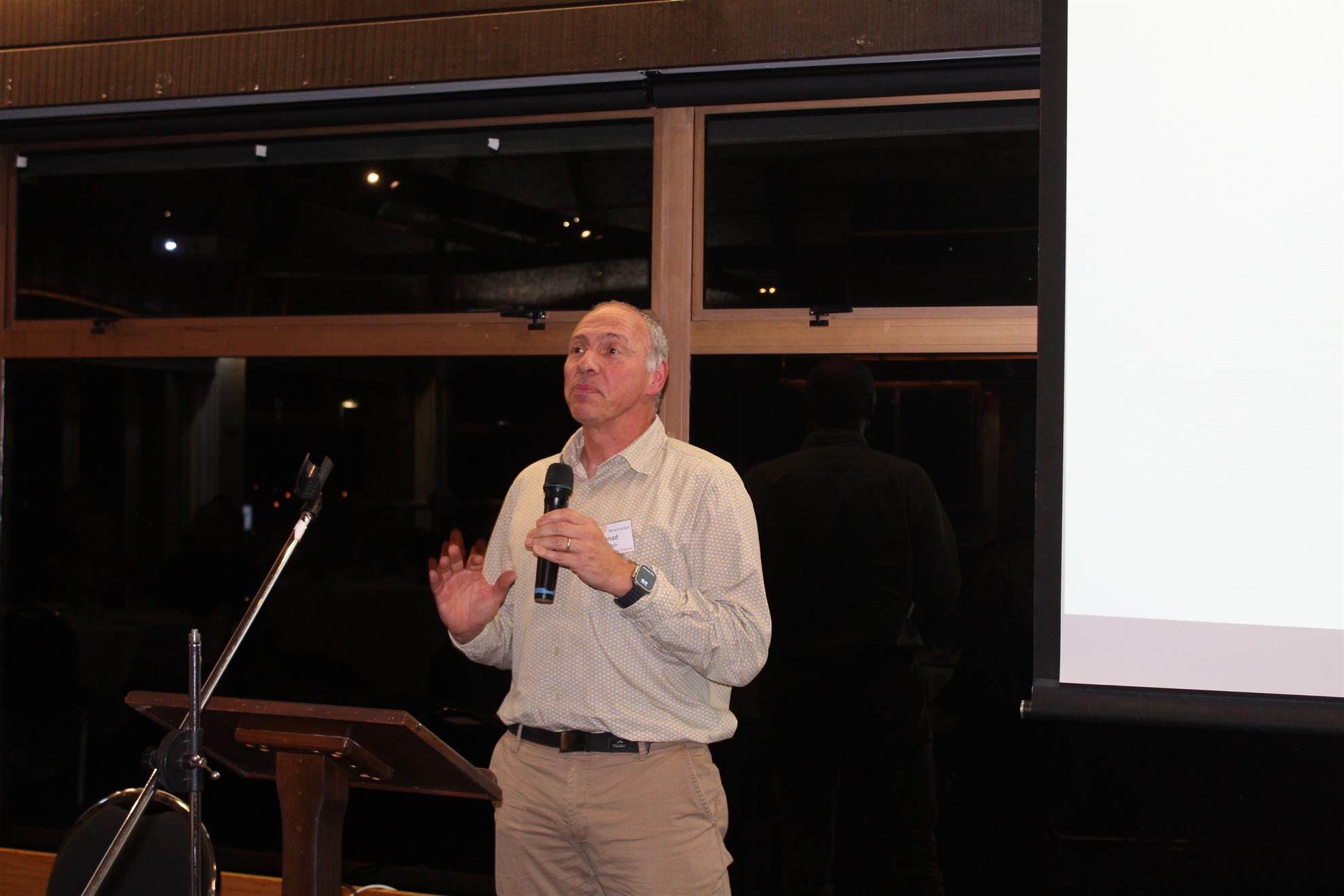
Conrad then spoke reiterating Andrew's points about the award's impact on students' careers. He shared his own experience of joining the Institute of Marine Sciences and his enthusiasm for the work being done in the Hauraki Gulf. He highlighted the importance of evidence-based action in managing the Gulf's ecosystem.
Conrad is looking forward to working with the team to select future award recipients and expressed his gratitude for the opportunity.
Rotary Newmarket needs you to help out with carparking at Mount Smart stadium.
Each game, this activity raises up to $2,000 for the club, or around $60,000 a year. This forms a major part of the funds for the club's youth programmes including RAP and RYPEN. Recently, Go Media Stadium has started blocking the road around the stadium when large crowds are expected meaning we need more volunteers, and the number of volunteers is beginning to fall below a sustainable level. Each game requires 8 volunteers, 3 at 23 Maurice Road and 5 at 5 Maurice Road. We don't expect you to show up every week, that would be silly. However, the more people who volunteer, the less of a commitment it is for each person and the more funds we can raise for the youth programs. You would be expected to arrive 2.5hours before the game starts and help with taking money via cash and EFTPOS and guiding drivers. Usually both parking lots are filled within two hours and after that almost everyone can go home. One or two volunteers would need to stay at 5 Maurice Road until an hour after the game to lock the gate. We'll provide safety vests and EFTPOS machines. We recommend bringing a water bottle. This crucial fundraiser can't continue to exist without your help, so please contact Shaun Peacock (email: shaun_peacock@windowslive.com Phone: 027 631 0065) to sign up.